M4A: One Compression, Done
YouTube encoded the audio to AAC once. The M4A is a straight copy, about 1 MB per minute, so a four-minute song is roughly 4 MB.
Original AAC, no second compression
YouTube to M4A saves the AAC audio track YouTube already stores, copied into an M4A file with no re-encoding, usually at about 128kbps. The tool does not create WAV files. If an editor or DAW needs WAV, save the M4A here, then export it as WAV with a free audio editor such as Audacity on your computer.
How to
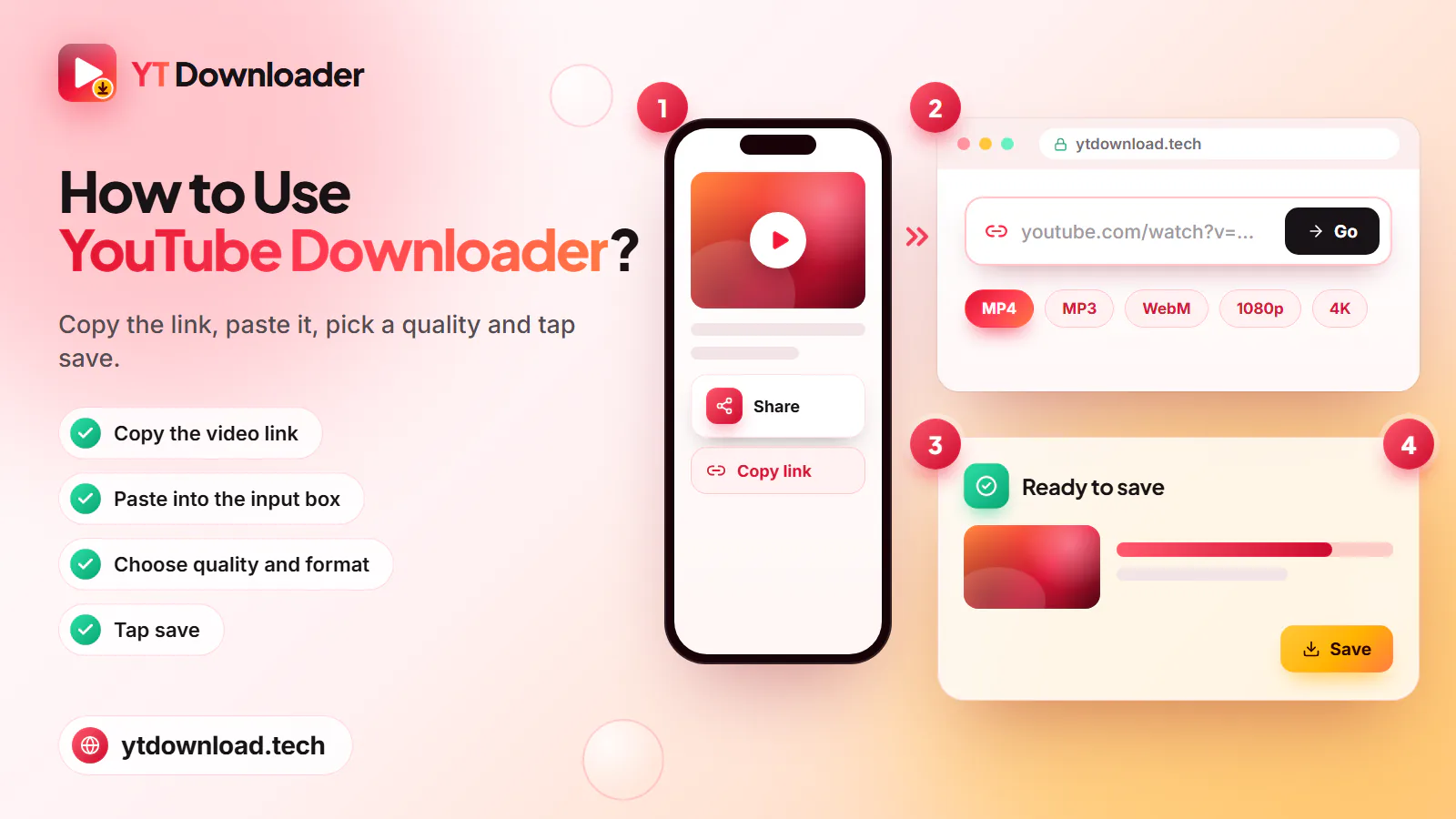
YouTube to M4A saves the AAC audio track YouTube already stores, copied into an M4A file with no re-encoding, usually at about 128kbps. Because nothing is decoded and compressed a second time, the file sounds exactly like what YouTube plays, at close to 1 MB per minute.
M4A has no bitrate setting: the tool picks the highest-bitrate AAC rendition the video lists and shows it on the Quality chip before you save.
The M4A plays in the Files and Music apps on iPhone, in Apple Music on a Mac, on Android phones and in Windows Media Player and VLC, so for most people it is the only file they need.
M4A or MP3
If you searched for a YT audio download in WAV or MP3, this is the comparison that matters. Both M4A and MP3 are lossy; the difference is how many times the audio has been compressed.
YouTube encoded the audio to AAC once. The M4A is a straight copy, about 1 MB per minute, so a four-minute song is roughly 4 MB.
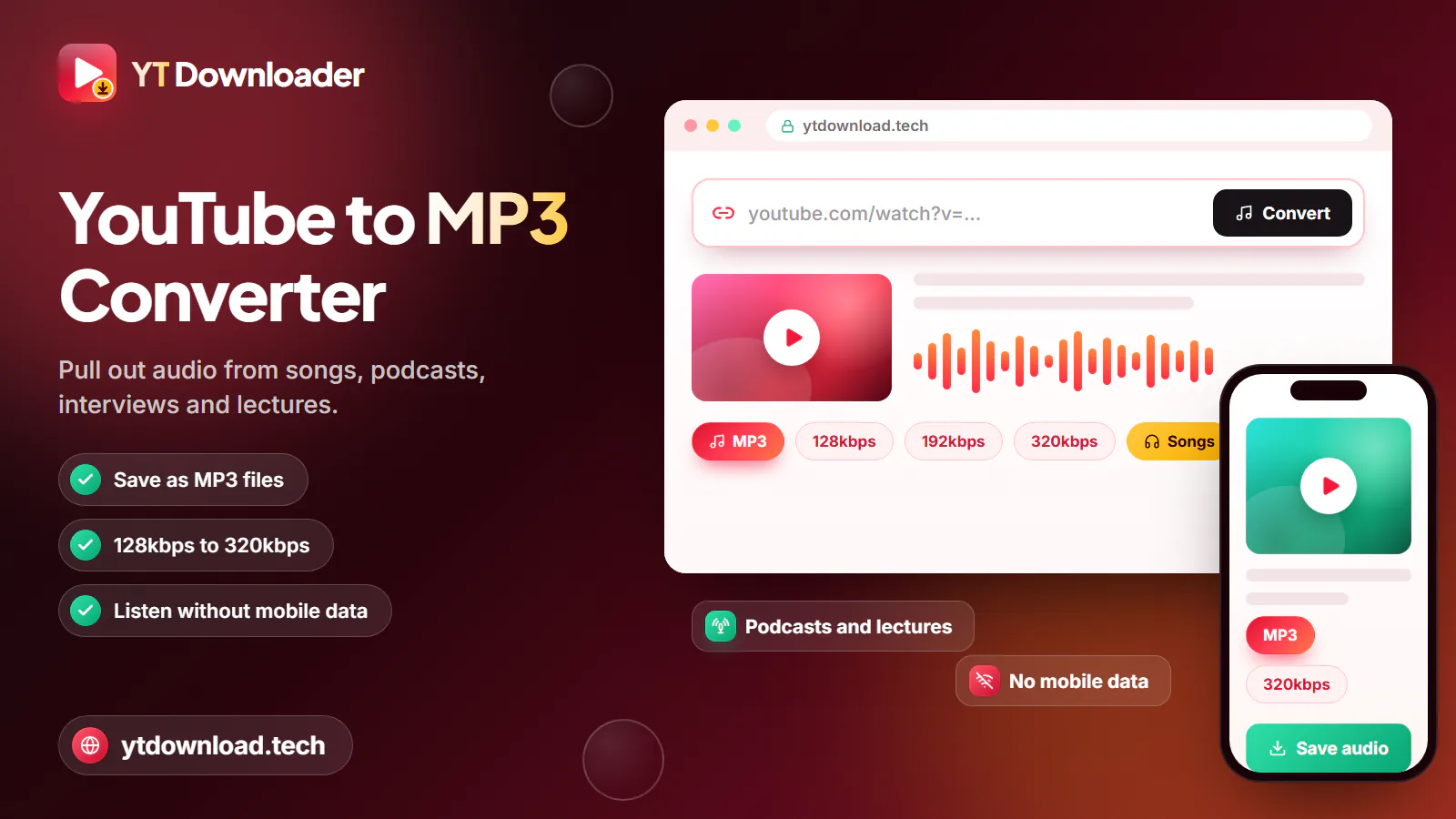
MP3 decodes YouTube's audio and compresses it again. At 320kbps the extra loss is small, but the file is about 2.4 MB per minute and never more detailed than the source.
MP3 conversion stops at about three hours. M4A is copied rather than converted, so longer lectures and livestream replays can be saved when an AAC track exists.
Pick MP3 for older car stereos and basic players that skip AAC, when a video offers no M4A, or when you want title and artist tags written in. M4A files are saved without tags.
About WAV
The tool does not create WAV files. There is no YT WAV download option here, and the formats on offer are MP4, MP3 and M4A. If an editor or DAW needs WAV, save the M4A here, then export it as WAV with a free audio editor such as Audacity on your computer.
In Audacity (Windows, Mac or Linux), open the M4A, then choose File, Export Audio and pick WAV; older versions call it Export as WAV. Audacity may ask you to install its free FFmpeg library before it can open M4A files. On a Mac, the Music app can do it too: set Settings, Files, Import Settings to WAV Encoder, select the track, then choose File, Convert, Create WAV Version. If you use the command line, ffmpeg -i audio.m4a audio.wav does the same job.
Keep expectations realistic. A WAV made from YouTube audio is bigger, not better: at CD settings (16-bit, 44.1kHz) it takes about 10 MB per minute, roughly ten times the M4A, yet it holds exactly the detail the M4A had. WAV is useful because editing apps, samplers and some video tools prefer uncompressed audio, not because it restores quality.
The same rules apply whatever format you end up with: save only audio you own, that is licensed for download, or that you have permission to use, and follow US copyright law and YouTube's Terms of Service. This is not legal advice.
Questions
Not directly. The tool saves audio as M4A or MP3, not WAV. Save the M4A, then export it to WAV with a free editor such as Audacity, the Music app on a Mac, or ffmpeg.
Here, slightly. The M4A is YouTube's AAC audio copied without re-encoding, while an MP3 is compressed a second time. On earbuds the difference is hard to hear, but M4A is the more faithful copy and usually the smaller file.
Open the M4A in Audacity and use File, Export Audio, then choose WAV. On a Mac you can also use the Music app's Create WAV Version option after setting the import encoder to WAV. The WAV will be about ten times larger but will not sound better.
M4A is offered only when the video has an AAC audio track to copy. Some videos list other audio streams but no AAC one, so the M4A chip does not appear. Choose MP3 instead, which is converted from the best audio available.
Yes, as M4A, when the video has an AAC track. The three-hour limit applies only to MP3 conversion. Very long recordings take longer to prepare, so keep the page open until the download starts.
Paste a YouTube link, select M4A and keep the original AAC track, ready to play or to export as WAV for your editor. Free, no app, no sign-up.
Updated